
The transition from owning a single commercial property to managing a massive, wealth-generating portfolio is one of the most challenging and rewarding journeys an investor can undertake. Moving past the initial stages of real estate investing requires a complete paradigm shift. You must stop thinking like a hands-on property operator and start thinking like a high-level portfolio manager.
Many ambitious investors hit a frustrating ceiling of complexity. They acquire their first few assets, only to find themselves completely bogged down in the minutiae of day-to-day operations. Constantly dealing with deferred maintenance, tenant complaints, and utility bills leaves absolutely no bandwidth for the most important activity: hunting for the next acquisition. When you are stuck in the operational weeds, your growth stagnates.
To break through this ceiling and scale effectively, you must systemize your growth. This means adopting a rigid framework for identifying properties that can be forcefully appreciated, modernizing outdated infrastructure to attract better tenants, and outsourcing the heavy lifting to highly specialized professionals. Scaling is not about working more hours; it is about working with better systems.
This guide provides an exhaustive blueprint for systemizing your acquisitions and operations. By implementing these core strategies, you will drastically increase your Net Operating Income, stabilize your expense ratios, and free up the capital and time necessary to acquire your next major asset.
Identify Value-Add Opportunities in Mismanaged Assets
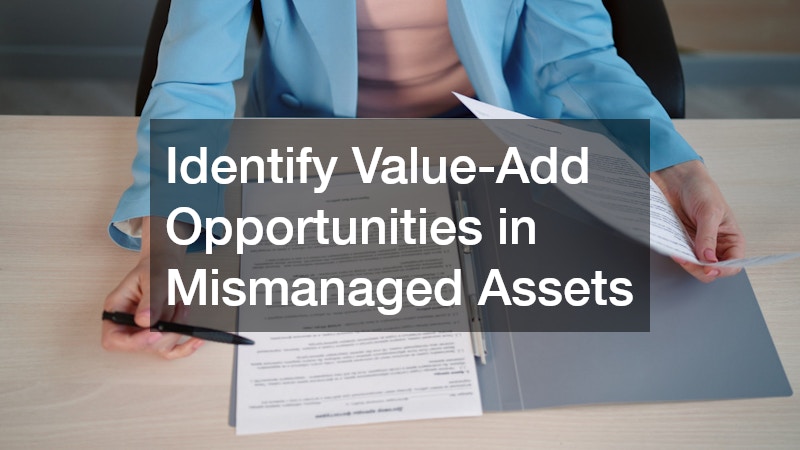
The most rapid way to scale a real estate business is by focusing heavily on value-add acquisitions. Rather than buying stabilized, fully leased Class A properties at a premium, the strategic investor looks for the “ugly ducklings”—Class B or C properties situated in historically strong or rapidly gentrifying Class A neighborhoods. These assets are often mismanaged, suffering from severe deferred maintenance, below-market rents, and high vacancy rates. By purchasing these underperforming assets and bringing them up to modern market standards, you forcefully appreciate the value of the building, creating immense equity that can be leveraged for future purchases.
When you acquire an outdated asset, the first step is almost always a complete interior repositioning. Older office buildings, retail centers, and industrial spaces typically feature highly compartmentalized layouts that modern tenants actively avoid. Today’s high-paying commercial tenants demand open floor plans, abundant natural light, and flexible workspaces. To achieve this, you will need to bring in experienced commercial demolition contractors to safely gut the obsolete interiors. These professionals can efficiently remove non-load-bearing walls, drop ceilings, and outdated fixtures, completely clearing the slate and prepping the floor plan for a modern, highly functional build-out.
However, no amount of interior renovation matters if the building’s exterior envelope is failing. Before spending a single dollar on aesthetic improvements, you must ensure the asset is fully protected from the elements. Water intrusion is the silent killer of real estate equity, leading to mold, structural rot, and catastrophic tenant disruption. Therefore, one of the very first capital expenditures upon acquiring a distressed asset must be securing the roof. By hiring professional commercial roofing services to conduct a thorough inspection, patch existing leaks, replace aging membranes, or install an energy-efficient TPO system, you safeguard your interior investments and provide peace of mind to incoming tenants.
To maximize the return on these initial heavy-lifting renovations, you must clearly project the impact on your Net Operating Income. Consider the following factors when underwriting your value-add strategy:
-
Assess the current rent roll against the neighborhood market average to determine the exact gap between actual and potential revenue.
-
Calculate the total cost of all capital expenditures, including tear-downs, environmental remediation, and structural repairs.
-
Determine the expected stabilization period, ensuring you have enough operating capital to carry the property while it is vacant during renovations.
-
Project the new valuation based on the anticipated stabilized Net Operating Income divided by the prevailing market capitalization rate.
Modernize Core Utilities to Reduce Long-Term Operating Expenses
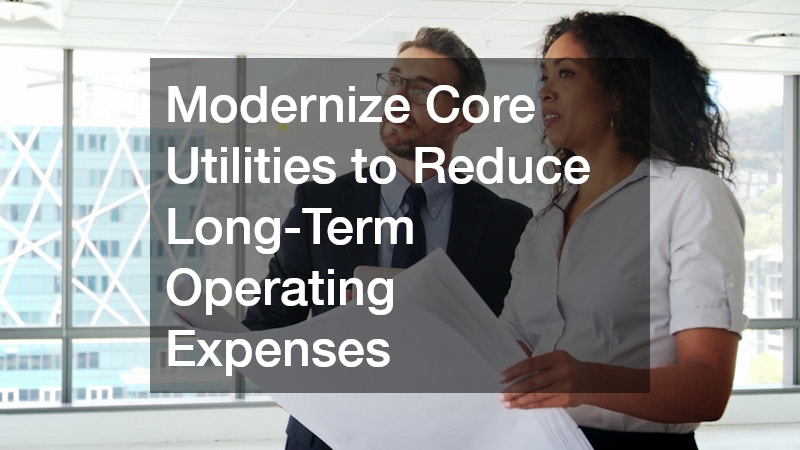
A critical but frequently overlooked aspect of scaling a portfolio is mastering operating expenses. Outdated utility systems act as a hidden drag on your cash flow, silently draining your profits through severe inefficiencies, frequent breakdowns, and astronomical monthly bills. When you are managing multiple properties, unpredictable expenses make scaling incredibly dangerous. Stabilizing a portfolio requires predictable, optimized overhead.
Modern commercial tenants, particularly those in the technology, advanced manufacturing, or specialized medical sectors, have massive power requirements. An older building with a legacy electrical panel simply cannot support the server rooms, heavy machinery, or advanced HVAC systems that premium tenants require. Partnering with licensed commercial electricians to completely upgrade your property’s power infrastructure is a necessary step. Upgrading the electrical panels, replacing outdated wiring, and retrofitting the entire building with smart LED lighting drastically reduces overall energy consumption and makes the building significantly more attractive to high-tier businesses.
For properties located in suburban or industrial areas just outside of municipal city sewer lines, waste management infrastructure becomes a major operational priority. Unseen utilities often cause the most catastrophic financial damage when ignored. Industrial assets with high-capacity waste systems must be meticulously maintained. Setting up routine pumping and comprehensive inspections via specialized commercial septic services is absolutely non-negotiable. Failing to maintain these systems can lead to massive environmental fines, severe property damage, and costly business interruptions for your tenants, which can instantly trigger lease termination clauses.
One of the most effective ways to instantly boost the valuation of your property is by implementing a comprehensive sub-metering strategy.
-
Install dedicated meters for water, electricity, and gas for every individual tenant space.
-
Shift the burden of utility consumption directly to the tenant, incentivizing them to conserve energy.
-
Remove highly variable utility costs from your own profit and loss statement, instantly increasing your overall Net Operating Income.
-
Use the stabilized expense data to negotiate better financing terms when refinancing the property, as lenders view sub-metered buildings as significantly lower risk.
Invest in High-Impact Exterior Upgrades to Attract Premium Tenants
The exterior of your property serves as the ultimate filter for the type of tenants you will attract. Premium, national credit brands—the kind of tenants that sign ten-year, triple-net leases—will categorically refuse to lease space in a building that looks dilapidated or poorly maintained from the street. The first impression dictates the perceived value of the space inside.
One of the most heavily utilized and rapidly degrading components of any property is the parking infrastructure. A cracked, pothole-riddled parking lot signals to prospective tenants that the landlord is entirely neglectful. Conversely, a flawless approach sets a tone of professionalism. Investing heavily in top-tier commercial pavement is essential. Laying down fresh asphalt, ensuring crisp and clear ADA-compliant striping, and engineering proper water drainage systems not only dramatically improves curb appeal but fundamentally mitigates your liability. Slip-and-fall accidents or vehicle damage caused by poorly maintained lots can lead to devastating lawsuits that cripple your ability to scale.
For retail centers, distribution hubs, and warehouses, the logistical functionality of the exterior is just as critical as its appearance. Tenants in these spaces rely on smooth, uninterrupted workflow to run their businesses. If loading docks are inefficient or security is compromised, they will look elsewhere. Upgrading access points is a high-ROI endeavor. Bringing in a reliable commercial garage door installer to fit rapid-roll doors, heavily insulated barriers, or advanced high-security access points will vastly improve tenant workflow, increase the building’s energy efficiency, and justify a significant bump in the price per square foot.
Consider these high-impact exterior upgrades to further elevate the property’s status:
-
Upgrade all exterior monument signage with modern, backlit designs to increase visibility from major thoroughfares.
-
Implement native, drought-resistant landscaping to create a polished, corporate environment while simultaneously driving down recurring landscaping and irrigation costs.
-
Install high-lumen, motion-sensor exterior lighting to enhance nighttime security and reduce the risk of vandalism or loitering.
-
Ensure all pedestrian walkways, ramps, and entryways are rigorously compliant with all current accessibility regulations to avoid costly legal challenges.
Implement Strict Preventative Maintenance Schedules to Avoid Catastrophic Loss
A foundational truth of real estate is that you cannot scale a business if you are constantly reacting to emergencies. Transitioning from a reactive operator to a proactive portfolio manager is the only way to achieve the predictable cash flow necessary for massive growth. Preventative maintenance is not just about keeping the building looking nice; it is a vital risk management strategy designed to prevent minor issues from snowballing into catastrophic, budget-destroying losses.
One area where proactive management is absolutely vital is sanitation and pest mitigation. A localized infestation might seem like a minor nuisance, but in a multi-tenant building, it can quickly escalate into a full-blown crisis. Rodents or insects can damage sensitive tenant equipment, cause severe health code violations, and trigger mass tenant turnover. Implementing a rigid, monthly or quarterly contract for commercial pest control is essential. By routinely treating the building’s perimeters, deep-cleaning trash enclosures, and monitoring common areas, you eliminate the problem long before it impacts your tenants’ daily operations.
Similarly, the highest-ticket items on your property must be audited continuously. The structural integrity of your asset depends on consistent oversight. We previously discussed the importance of securing the building envelope during the acquisition phase, but that is not a one-time task. You must schedule rigorous bi-annual infrastructure audits with reliable commercial roofing services every spring and fall. These routine inspections are critical for clearing blocked drainage systems, identifying early signs of membrane blistering, and fixing minor seam separations before they evolve into multi-million-dollar structural disasters.
To execute this level of proactive management across a growing portfolio, you must abandon manual spreadsheets and adopt robust digital infrastructure:
-
Implement dedicated property management software to centralize all maintenance requests, vendor contracts, and compliance documents.
-
Set up automated, recurring work orders for all HVAC filter changes, fire suppression system tests, and elevator inspections.
-
Digitize and track all equipment warranties so that you never accidentally pay out of pocket for a repair that is legally covered by the manufacturer.
-
Require your property managers to upload photo documentation of all completed preventative maintenance tasks to ensure absolute accountability.
Build a Vetted Network of Specialized Vendors for Scalable Management
Your portfolio can only grow as fast as your operational capacity allows, and that capacity is directly tied to the quality of your vendor network. An investor’s ability to scale is frequently bottlenecked by an inability to execute capital improvements and repairs efficiently. If you are self-managing every minor repair, negotiating with single-truck plumbers, and driving to hardware stores, you are acting as an employee of your portfolio, not its owner.
Securing high-level project management is the ultimate key to delegation. As you acquire more properties, you will frequently find yourself managing multiple large-scale renovations in entirely different zip codes simultaneously. This requires having deeply trusted commercial contractors on speed dial. Establishing long-term, mutually beneficial relationships with high-level general managers allows you to hand off complete scopes of work with confidence. These professionals handle the intricate details of pulling municipal permits, managing sub-trades, and ensuring that massive repositioning projects are completed strictly on time and under budget.
Furthermore, when planning these renovations, your design philosophy must shift toward extreme durability. When you own one building, maintaining painted railings might be manageable. When you own twenty buildings, repainting high-traffic areas becomes a massive, unnecessary line item on your budget. Instruct your teams to utilize materials and finishes that require zero long-term maintenance. For high-traffic metal assets—such as exterior staircases, security gates, or industrial handrails—mandate the use of commercial powder coating instead of traditional paint. This process creates an incredibly durable, baked-on finish that forcefully resists rust, chipping, and fading, entirely eliminating the need for constant touch-ups over the lifecycle of the asset.
Building this elite vendor network requires a strict, uncompromising vetting process:
-
Demand proof of specialized, commercial-grade licensing for every trade, refusing to work with residential vendors who lack the capacity for large-scale operations.
-
Require comprehensive insurance, including massive general liability policies and up-to-date worker’s compensation, to shield your portfolio from job-site litigation.
-
Review comprehensive portfolios of past projects specifically identical in scope and scale to your own requirements.
-
Establish strict, standardized payment terms and require unconditional lien waivers upon every milestone payout to protect your property’s title.
Conclusion
Scaling from a handful of small investments to a massive, institutional-grade real estate portfolio is not achieved by simply working harder. It is achieved by implementing highly efficient operational systems, prioritizing proactive preventative maintenance, and aggressively forcing appreciation through strategic, calculated building upgrades. The most successful investors view their properties not just as physical structures, but as sophisticated financial instruments that must be ruthlessly optimized.
As your holdings expand, your most valuable asset ceases to be the real estate itself and becomes your own time. Your daily focus must remain strictly on analyzing new deals, securing favorable financing, and building relationships with equity partners. You cannot afford to manage leaky pipes, coordinate parking lot repairs, or personally oversee tenant build-outs. Building a trusted, highly competent team of third-party managers and specialized professionals is the ultimate growth hack in this industry.
Take a hard look at your current assets today. Identify just one property in your portfolio where you can immediately implement a value-add renovation or systemize a lagging maintenance routine. By taking decisive action to optimize your current operations, you will instantly increase your net operating income, stabilize your cash flow, and pave the way for your next major acquisition.