The modern supply chain is under unprecedented pressure. As global e-commerce volumes swell and consumer expectations for rapid, error-free delivery reach all-time highs, the warehouse has transformed from a simple storage depot into a high-stakes arena of competitive advantage. To maintain operational fluidness amid shifting labor markets and rising real estate costs, facilities must maximize every square inch of space and every second of operational time.
At the center of this logistical revolution sits a foundational piece of warehouse hardware: the material handling vehicle. For decades, fleet management focused primarily on baseline uptime and mechanical durability.
However, a new era of intelligence and engineering has arrived. Transitioning to next-generation lifts is no longer just an incremental equipment upgrade; it has become a prerequisite for unlocking the next level of operational efficiency and safety.
The Technological Leap in Material Handling
Traditional warehouse fleets, while dependable, increasingly struggle to keep pace with the hyper-optimized workflows of modern logistics. Next-generation lifts solve these structural challenges by blending advanced mechanical design with deep digital connectivity. Chief among these evolutionary steps is the rapid adoption of lithium-ion power architectures over traditional lead-acid batteries. This shift eliminates hours of unproductive downtime previously spent on lengthy charging cycles, battery swapping, and hazardous maintenance routines. Instead, opportunity charging allows operators to plug in during short breaks, keeping machinery moving across multiple shifts without degradation in performance.
Beyond the power source, ergonomics and ergonomics-driven data analytics have redefined what a forklift can achieve. Modern cabins are constructed with operator health in mind, utilizing advanced vibration dampening, intuitive controls, and high-visibility sightlines to dramatically reduce operator fatigue. Simultaneously, integrated telematics systems act as the central nervous system of the vehicle, streaming real-time data regarding battery health, impact detection, and utilization metrics directly to fleet managers. This shift from reactive maintenance to predictive asset management minimizes unplanned downtime, ensuring that capital investments remain productive on the floor rather than stranded in the repair bay.
Beyond the immediate boosts to floor efficiency and workplace safety, investing in next-generation material handling technology represents a significant step forward in corporate sustainability. Older, internal combustion models contribute heavily to a facility’s localized carbon footprint and require extensive ventilation systems to maintain safe indoor air quality. By contrast, the modern electric power plants found in today’s leading lift equipment produce zero localized emissions, allowing companies to align their daily warehouse logistics with broader environmental, social, and governance (ESG) goals. When looking to future-proof an enterprise, upgrading the fleet transforms the warehouse from a traditional cost center into a clean, data-driven engine of sustainable growth.
Maximizing Spatial Efficiency and Warehouse Density
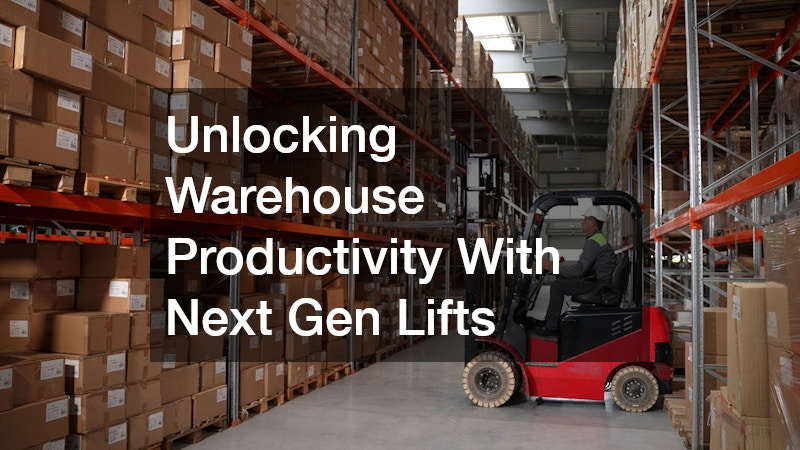
As industrial real estate costs continue to soar, building outward is rarely a viable financial option. Instead, operations must look upward, maximizing vertical storage capacity and narrowing aisle widths to create higher-density configurations. Standard handling equipment often falls short in these cramped, high-altitude environments due to physical limitations in turning radii and mast stability. Next-generation lifts, explicitly engineered for narrow-aisle (NA) and very-narrow-aisle (VNA) environments, provide the precise maneuverability required to navigate compressed layouts safely.
Transitioning to a high-density footprint utilizing advanced articulating masts can expand storage capacity by up to 40% within an existing facility footprint, deferring the massive capital expenditure of moving to a larger warehouse.
These advanced machines feature sophisticated mast stabilizer systems that counteract sway at extreme heights, allowing operators to confidently retrieve and deposit heavy pallets twenty, thirty, or forty feet in the air. By shrinking the footprint required for basic travel lanes, facilities can reclaim vast amounts of square footage for additional racking. When operations reach these spatial bottlenecks, searching for a high-performance new fork lift for sale becomes less about acquiring a piece of iron and more about purchasing the physical capability to scale warehouse capacity without altering the building’s brick-and-mortar footprint.
Fostering a Culture of Safety and Precision
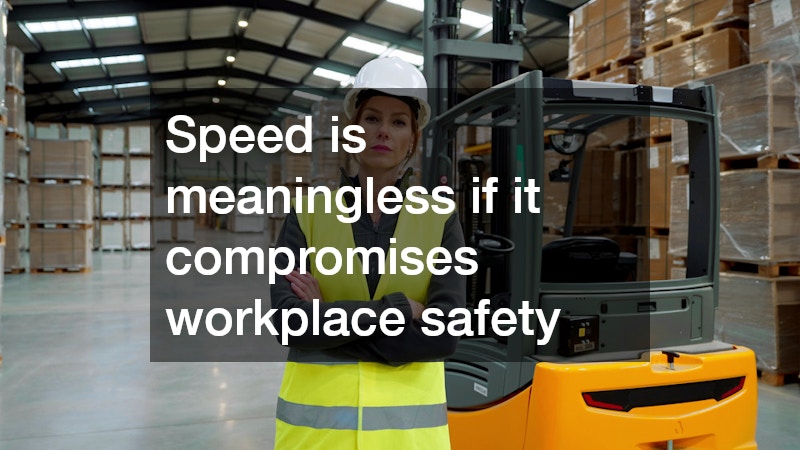
Speed is meaningless if it compromises workplace safety. In fact, a rapid warehouse environment devoid of robust protective guardrails is a liability. Next-generation material handling equipment bridges the gap between high throughput and rigorous safety protocols through active driver-assistance systems. Utilizing sophisticated proximity sensors, radar, and onboard cameras, these intelligent vehicles continuously scan their surroundings for pedestrians, structural obstacles, and other fleet assets. If a collision risk is detected, the lift can automatically govern its own speed or execute a controlled halt, effectively mitigating human error in high-traffic corridors.
Furthermore, automated height-selectors and laser-guided fork leveling systems take the guesswork out of high-rack positioning. Instead of relying solely on an operator’s depth perception from dozens of feet below, the vehicle assists in aligning the forks perfectly with the pallet pockets. This extreme precision drastically reduces product puncture injuries, rack damage, and catastrophic inventory drops. By empowering operators with these advanced situational tools, facilities can systematically lower insurance overhead, protect valuable inventory, and most importantly, ensure that every team member returns home safely at the end of their shift.
Ultimately, the trajectory of modern warehousing demands an agile, technology-forward approach to fleet management. By embracing next-generation lifts, logistics leaders can simultaneously conquer spatial limitations, elevate safety benchmarks, and drive down total cost of ownership, securing a resilient foundation for the supply chain challenges of tomorrow.